

Understanding stalking in honour based abuse and cultural contexts
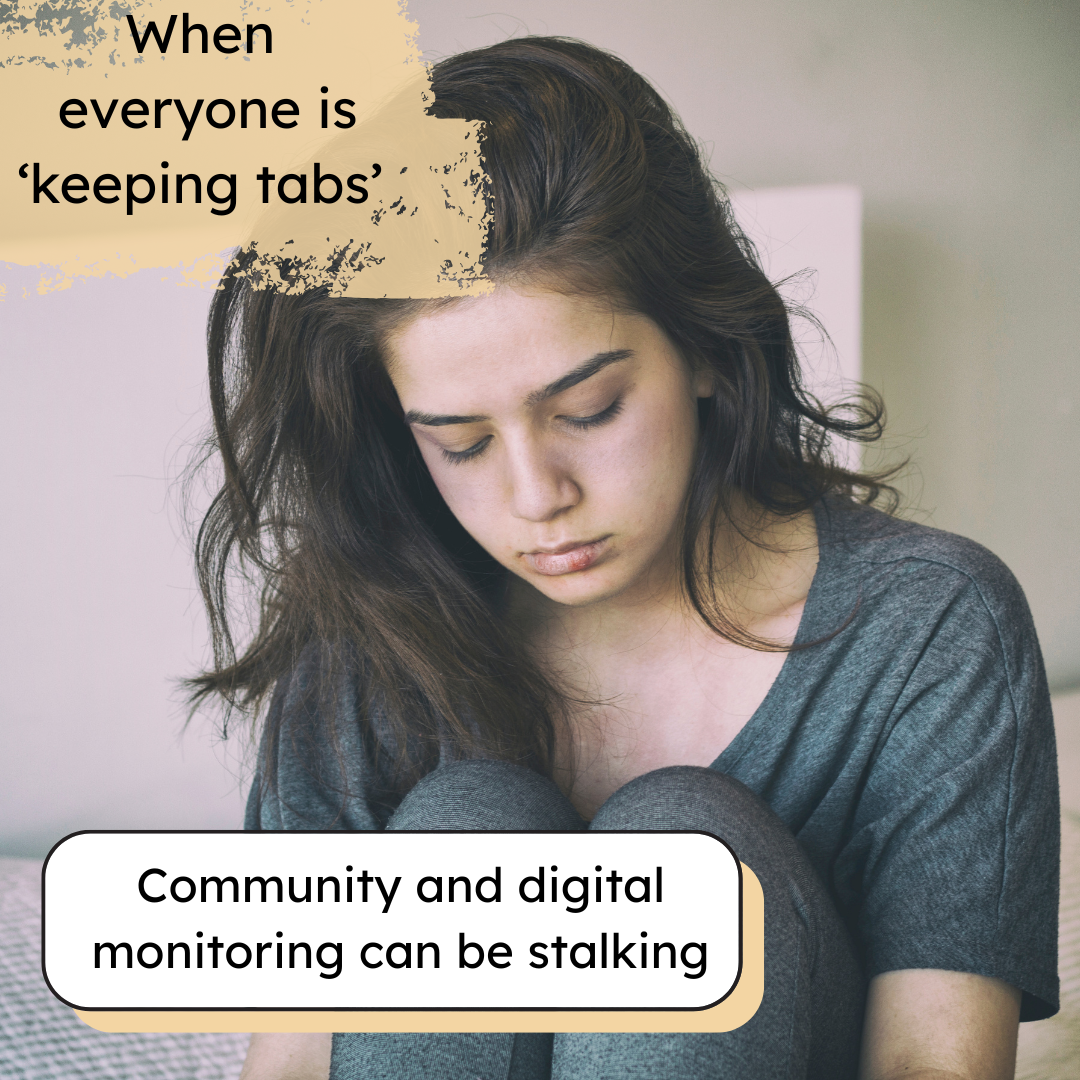
In the context of honour‑based abuse (HBA) or within certain cultural or family systems, stalking can involve multiple people and multiple forms of monitoring, all aimed at controlling someone’s behaviour or punishing perceived “dishonour”.
Here are some common ways stalking may appear in these contexts.
Multiple family members “keeping tabs” on the victim
Instead of a single person, several relatives may monitor someone’s movements, relationships, or day‑to‑day life.
Examples include:
- Family members taking turns to watch the home or workplace
- Cousins or extended relatives reporting back on who the person meets
- Community members being asked to alert the family if the person is seen outside or speaking with someone
- Misusing someone’s NHS or National Insurance numbers to access or infer private information about their appointments, services, or personal records as a form of monitoring or control
This makes the stalking feel inescapable. An Essex victim/survivor supported by and Independent Stalking Advocacy Caseworker (IDVA) from Changing Pathways said:
“After I left, the pressure became worse. Relatives, family friends, even people I didn’t know were contacting me or asking about me. It feels like there is no escape because it’s not just one person.”

Using community networks to monitor or track
In some communities, extended networks are used to:
- Track when someone leaves the house
- Ask shopkeepers, neighbours, taxi drivers or faith‑based community members for updates or to find people
- Spread rumours or gather information
Everyday environments turn into sources of anxiety for the victim/survivor.
Controlling or monitoring digital spaces
Honour‑based control, can also include Tech‑enabled abuse. This happens even if the survivor has physically moved away or separated and can include:
- Checking phone records or installing spyware
- Demanding access to social media accounts
- Monitoring WhatsApp, Snapchat, or location‑sharing
- Tracking “last seen” times or posting surveillance messages through group chats
- Using banking or banking apps to stalk spending patterns or see where someone is withdrawing money
- Monitoring emails
Surveillance during separation or divorce
Separation or divorce is often seen as “shameful”, and stalking may intensify after the person leaves.
This may involve:
- Being followed to new addresses or jobs
- Turning up uninvited at family court or legal appointments
- Monitoring contact with support services or professionals
- Keeping watch to see if the person forms a new relationship
- Using cameras, surveillance systems, or dash cams to monitor someone’s movements or activities
This perfectly aligns with post‑separation stalking, but the motivations are framed around “honour”, reputation or control.
This pattern is reflected in real cases, including recent honour‑based abuse prosecutions reported by Karma Nirvana.
Habibur Masum Jailed for Life for the Murder of Kulsuma Akter – Karma Nirvana
Using children, relatives or community members to pass messages
This can include:
- Sending messages through siblings, in‑laws or children
- Asking relatives overseas to call and pressure the survivor
- Using family events to gain access or information
This creates constant indirect contact even when direct contact is blocked.
Tracking through travel, migration or document control
In some cases, stalking takes place across borders:
- Confiscating passports or documents
- Threatening to track the person if they return to their country of origin
- Contacting extended family overseas to apply pressure
This global dimension can make survivors feel like there is “no safe place”. An Essex victim/survivor supported by an IDVA from Changing Pathways said:
“Because of my immigration status, I felt trapped. I was scared to ask for help, and they used that against me. The monitoring, messages through others, and threats made me feel like I had no control over my life.”

Using religious, cultural or community leaders to exert control
This reinforces surveillance under the guise of cultural responsibility and may involve:
- Leaders or elders advising others to “watch” the person
- Pressure to return home for “mediation”
- Shame‑based messages spread to the community
- Threats disguised as community guidance
Why this still counts as stalking
Even when stalking is carried out by multiple people, framed as “concern”, or embedded in cultural expectations, it still involves:
- Persistent and unwanted attention
- Monitoring, tracking, or controlling behaviour
- Actions that cause fear, anxiety, or distress
- A pattern of behaviour designed to limit someone’s freedom
This fits the definition of stalking and must be treated as a serious safeguarding concern.
Help and support
Local
- COMPASS is the domestic abuse line for Essex, and you can call them on 0330 333 7 444 or visit their website.
- Local safeguarding teams – in Essex, Southend, and Thurrock for Adults and Children.
National
- Karma Nirvana – 0800 5999 247 (specialist support for HBA and forced marriage).
- Southall Black Sisters – 020 8571 0800 (provides holistic advocacy services aimed at helping Black and minoritised women live free from all forms of violence and abuse).
In an emergency always call 999.